



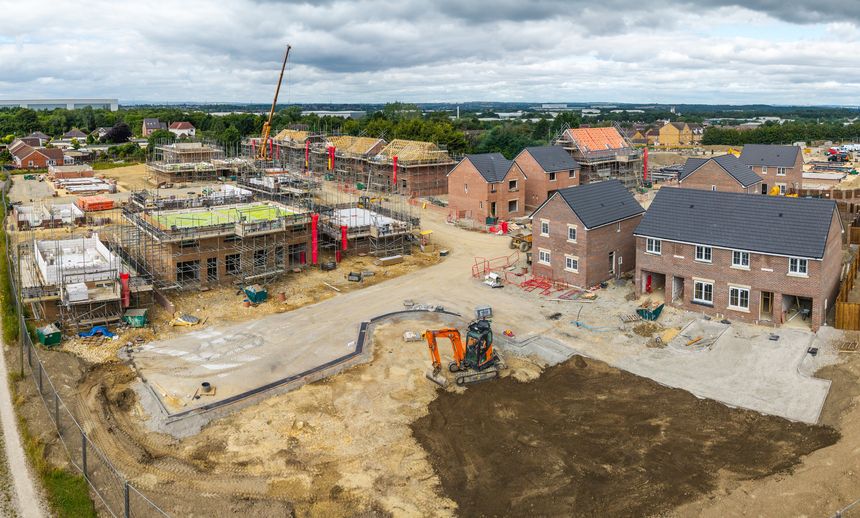
In Murray v Windsor Brunello Ltd, 2026 ABCA 275, the Alberta Court of Appeal considered when financial losses arising from construction deficiencies may be recovered in negligence. The decision clarifies the distinction between claims for negligently supplied defective structures and claims for negligent performance of professional services. It also confirms contractual and tortious duties may coexist unless the parties’ agreement limits or excludes the duty that would otherwise arise in tort.
Background and Trial Decision
Donald and Linda Murray retained Windsor Brunello Ltd. under an oral agreement to act as project and construction manager for their custom home. Alberta Engineering Ltd. (AEL) provided engineering services, with one individual acting both as Windsor’s lead project manager and AEL’s consulting engineer.
The dispute concerned deficiencies affecting the great room and master bedroom windows and sliding doors. Deflection in the supporting structures caused the doors to bind and become increasingly difficult to operate.
Following an 11-day trial, Justice Sidnell found Windsor liable for breach of contract based on its failure to properly coordinate the project, including the engineering and installation of the window and door systems. The Murrays were awarded approximately $915,000 in damages, plus prejudgment interest.
Justice Sidnell also found deficiencies in AEL’s engineering services. However, breach of contract had not been pled against AEL and contractual liability could not be imposed. She dismissed the negligence claims as well, finding the defects did not create the “real and substantial danger” required for recovery for a negligently supplied defective or “shoddy” structure. She also declined to impose liability for negligent performance of professional services, as the parties’ contractual relationship permitted them to allocate that risk by agreement.
The Court of Appeal held this analysis did not fully address the negligence claim against AEL.
What is Pure Economic Loss?
Pure economic loss is financial loss that does not arise from personal injury or physical damage to the plaintiff’s property. It differs from consequential economic loss, where financial losses flow from an independently actionable injury. In a construction context, repair costs may constitute pure economic loss where defective work has not injured anyone or damaged other property.
There is no general right to recover pure economic loss in negligence. A plaintiff must still establish a duty of care, breach of the applicable standard of care, compensable damage, and factual and legal causation.
The Supreme Court of Canada has recognized three broad categories of pure economic loss between private parties: negligent misrepresentation or performance of a service; negligent supply of shoddy goods or structures; and relational economic loss. Two were engaged in Murray: negligent supply of a defective structure and negligent performance of professional services.
Negligent Supply of a Defective Structure
The defective or “shoddy” structure category originates from Winnipeg Condominium Corporation No 36 v Bird Construction Co, [1995] 1 SCR 85. The Supreme Court held that repair costs may be recoverable where negligent design or construction creates a real and substantial danger to persons or property. The law does not require an owner to wait for a dangerous defect to cause injury before taking reasonable steps to correct it.
To recover under this category, the plaintiff must establish a real and substantial danger caused by the defendant’s negligence and that the repairs were reasonably necessary to eliminate that danger.
The doctrine therefore distinguishes between removing a dangerous defect and obtaining the quality of construction the plaintiff expected to receive. Tort law may permit recovery of the cost of eliminating a negligently created danger, but it does not ordinarily provide a remedy simply because work is defective, substandard or fails to perform as expected. Those concerns generally fall within contract law.
In Murray, the Court of Appeal agreed with Justice Sidnell that the deficiencies in the windows and sliding doors did not create a real and substantial danger to occupants or other property. The claim therefore could not succeed under the defective-structure category.
However, that did not end the negligence analysis.
Negligent Performance of Professional Services
The Murrays also alleged that AEL negligently performed the engineering services it undertook to provide. This is a separate category of pure economic loss.
In a professional-services claim, the focus is whether the defendant undertook to provide services in circumstances where the plaintiff reasonably relied on them, and whether the defendant failed to exercise the required standard of care.
Justice Sidnell had already found AEL undertook to provide engineering services in accordance with the Alberta Building Code and with the care and skill expected of a reasonably competent engineer. The Murrays relied on that expertise, and aspects of AEL’s engineering were deficient.
The Court of Appeal therefore held the absence of a dangerous defect did not dispose of the negligence claim. The defective-structure claim and the professional-services claim rested on different duties and required separate analyses.
Concurrent Liability in Contract and Tort
The remaining issue was whether the contractual relationship between AEL and the Murrays displaced the duty arising in tort.
Justice Sidnell concluded that the existence of the contract weighed against imposing an independent tort duty because the parties had the opportunity to allocate their risks by agreement. The Court of Appeal held this went too far.
In BG Checo International Ltd v British Columbia Hydro and Power Authority, [1993] 1 SCR 12, the Supreme Court confirmed the same conduct may give rise to liability in both contract and tort. Parties may limit or exclude a common law duty by agreement, and a plaintiff cannot use tort law to avoid a valid contractual limitation. However, the mere existence of a contract does not eliminate a concurrent duty of care.
In Murray, the contractual relationship did not negate the duty arising from AEL’s undertaking to provide professional engineering services.
The Court therefore set aside the dismissal of the negligence claim against AEL. AEL and Windsor were held jointly and severally liable for the Great Room damages, while Windsor remained solely liable for the Master Bedroom damages. The result permitted Windsor to seek contribution from AEL for the Great Room loss.
Windsor’s Contractual Liability
Windsor separately challenged Justice Sidnell’s interpretation of its oral construction management agreement. She had implied approximately 30 detailed terms into the agreement, many of which the Court of Appeal found were not sufficiently supported by the evidence or a recognized basis for implying contractual terms.
The error did not change the result. Windsor’s broader obligations to manage and coordinate the project, including the work of trades and engineering consultants, were sufficient to support the finding of breach.
Key Takeaways
- The category of pure economic loss matters. A failed defective-structure claim does not necessarily defeat a separate professional negligence claim.
- Non-dangerous construction defects remain primarily contractual. The “shoddy structure” doctrine is directed at eliminating a real and substantial danger.
- Professional consultants may owe concurrent duties in contract and tort. A contract does not itself displace a tort duty unless its terms limit or exclude that duty.
- The distinction can affect allocation of loss. Here, AEL’s negligence resulted in joint and several liability and permitted Windsor to seek contribution.
/Passle/593009bf3d94760454b5e183/SearchServiceImages/2025-07-04-19-54-57-855-686831918714336e9f5574a9.jpg)
/Passle/593009bf3d94760454b5e183/SearchServiceImages/2026-09-02-15-07-09-986-6a983b9d153afd561e2a83c7.jpg)
/Passle/593009bf3d94760454b5e183/SearchServiceImages/2026-08-26-19-17-46-642-6a8f3bda2f61414a67f472ec.jpg)
/Passle/593009bf3d94760454b5e183/SearchServiceImages/2026-08-18-22-24-26-924-6a84db9a563c5c47f0068219.jpg)