In T&S Transportation Systems Inc. v Bendix Commercial Vehicle Systems LLC, 2026 BCSC 1942, the British Columbia Supreme Court dismissed a product liability action for want of prosecution after approximately 14 years had elapsed since the underlying incident. Although the Court found that critical evidence had been intentionally destroyed, it declined to dismiss the action on the alternative basis of spoliation.
The decision provides an important reminder that the loss of evidence may be fatal to an action even where there is no intention to interfere with the litigation.
Background
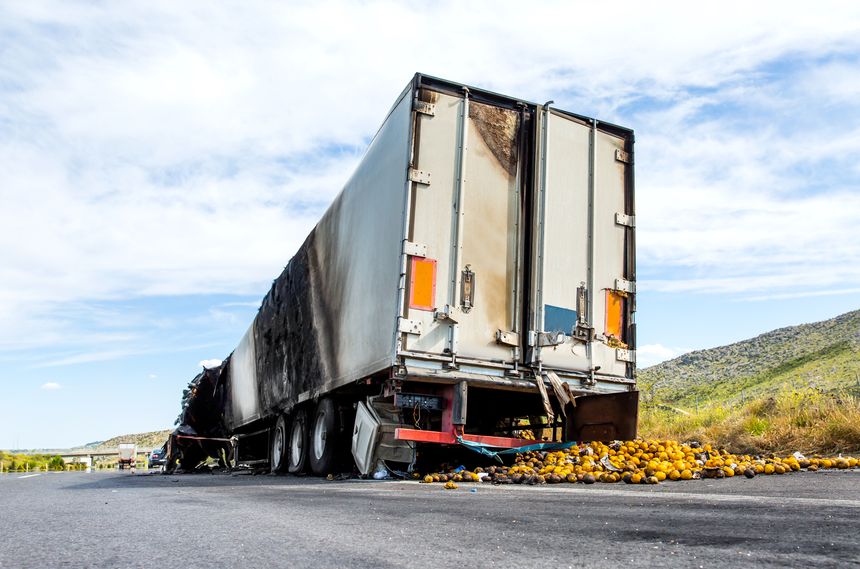
The action arose from a January 2012 fire involving a commercial truck travelling from Toronto to Vancouver. The plaintiff alleged that defects in the design or manufacture of the truck or its braking system caused the fire.
Separate proceedings were commenced in Manitoba and British Columbia by insurers of the truck and its cargo. Efforts to coordinate the proceedings, amend the pleadings and schedule examinations for discovery resulted in significant delays. Nearly 14 years after the incident, no trial date had been set.
During examinations for discovery, the defendants learned that the truck had been salvaged years earlier and that the plaintiff had destroyed its maintenance records, driver logs and inspection records pursuant to its six-year document retention policy.
In addition, the plaintiff’s representative had limited recollection of the relevant events, and no engineering evidence had been obtained. Although representatives of the defendants had inspected the truck in 2012, their observations were limited to a brief memorandum and photographs.
The defendants applied to dismiss the action for want of prosecution under Rule 22-7(7) of the Supreme Court Civil Rules and, alternatively, on the basis of spoliation of evidence.
The Legal Issues
The Court considered two distinct issues:
1. Should the action be dismissed under Rule 22-7(7) because of inordinate and inexcusable delay resulting in prejudice?
2. Did the destruction of evidence constitute spoliation, justifying dismissal of the action?
Dismissal for Want of Prosecution
The Court applied the three-part test established in Giacomini Consulting Canada Inc. v. The Owners, Strata Plan EPS 3173, 2023 BCCA 473:
1. Was the delay inordinate?
2. Was the delay inexcusable?
3. If so, is it nevertheless in the interests of justice to allow the action to proceed?
The Court concluded that the plaintiff had permitted multiple periods of excessive delay. Although the plaintiff argued that efforts had been made to coordinate procedural steps with opposing counsel, the Court emphasized that responsibility for advancing the litigation rests with the plaintiff. Importantly, the Court noted that plaintiffs must take proactive steps to move proceedings forward.
Having found the delay both inordinate and inexcusable, the Court turned to whether allowing the action to proceed would be in the interests of justice.
The destruction of the truck and its maintenance records was particularly significant. The defendants were deprived of the opportunity to conduct a forensic examination of the truck and its braking components, while the absence of maintenance records and the deterioration of witness recollections further compromised their ability to defend the allegations.
Accordingly, the Court concluded that there was a substantial risk that a fair trial was no longer possible and dismissed the action for want of prosecution.
The Spoliation Argument
The defendant also relied on the Supreme Court of Canada’s decision in SS&C Technologies Canada Corp. v. Bank of New York Mellon Corp., 2026 SCC 29, which identifies four elements necessary to establish spoliation:
1. Evidence was intentionally destroyed, altered, mutilated, or concealed;
2. Litigation was ongoing or reasonably contemplated at the time;
3. The evidence was relevant to the litigation; and
4. It was reasonable to infer that the evidence was destroyed to affect the litigation.
The Court found that the first three elements were satisfied. However, it was not prepared to infer that the destruction was intended to affect the litigation.
Although the plaintiff had destroyed relevant records pursuant to its document retention policy, the Court characterized that conduct as, at most “utterly thoughtless” (para 30). Therefore, the Court declined to dismiss the action on the basis of spoliation.
This distinction is particularly noteworthy. The intentional destruction of relevant evidence does not, without more, establish spoliation. Nevertheless, the resulting prejudice may still be sufficient to support dismissal for want of prosecution.
Comparison with Alberta’s approach to litigation delay
A similar mechanism for addressing litigation delay exists in Alberta under Rule 4.31 of the Alberta Rules of Court. Like British Columbia’s Rule 22-7(7), Alberta’s Rule 4.31 permits the dismissal of a claim where litigation delay has resulted in significant prejudice to a party.
However, the applicable tests differ. In British Columbia, prejudice is considered as part of the broader interests-of-justice analysis once inordinate and inexcusable delay has been established, whereas in Alberta, significant prejudice is presumed where the delay is found to be inordinate and inexcusable (Rule 4.31(2)). Further, Alberta’s Rule 4.31(3) requires the Court to consider whether the applicant contributed to the delay.
Although the procedural frameworks differ, the underlying concern is similar in British Columbia and Alberta: prolonged litigation delay may justify dismissal where it materially compromises a party’s ability to receive a fair trial. The loss of critical evidence in T&S Transportation illustrates the type of prejudice that could also support an application under Alberta’s Rule 4.31.
Conclusion
This decision highlights that the consequences of litigation delay extend beyond the mere passage of time. Where delay is accompanied by the loss of critical evidence, the resulting prejudice may
undermine the possibility of a fair trial. The message is clear: preserving evidence and advancing proceedings diligently are essential to protecting the ability to prosecute or defend a claim.
Key Takeaways
This decision offers several important lessons for counsel and insurers, particularly concerning delay and the preservation of evidence.
1. The passage of time alone is not necessarily the decisive consideration in a want of prosecution application. The resulting prejudice may significantly influence whether the interests of justice favour dismissal;
2. Spoliation and evidentiary prejudice are distinct considerations;
3. Document retention policies should be reconsidered once litigation is reasonably contemplated;
4. At the outset of litigation, counsel should consider sending a written preservation request, identifying relevant evidence that should be retained by the opposing party;
5. Plaintiffs must actively advance their proceedings. Attempts to obtain agreement from opposing counsel will not necessarily excuse prolonged periods of inactivity; and
6. The decision underscores the importance of early evidence preservation and forensic investigation, particularly in product liability, property damage and subrogated recovery claims where physical evidence may be central to establishing causation.